
Report
4 min read
Positions and principles
Explore ExxonMobil’s advocacy positions and principles for driving a lower-emission future through innovative technologies and sustainable policies.
- Advanced recycling - Pathways to a more circular economy
- Carbon capture and storage - Enabling deployment at scale
- Methane detection and mitigation - Policy, technology and action
Report
4 min read
Navigate to:
Our approach
Through various channels – including this report, press releases, our corporate website (ExxonMobil.com), and our Exxchange portal – we directly articulate our positions on policies that are consequential to the success of our business, the interests of our employees and shareholders, and benefits to our customers. These positions inform and provide the basis for the company’s lobbying and advocacy efforts.
We regularly review market conditions, technological advancements, and policy changes to adjust our advocacy efforts accordingly. We represent our shareholders, employees, customers and communities when we advocate. When deciding how and when to actively communicate about energy and environmental topics, ExxonMobil considers factors including the benefit to society, cost-effectiveness, risk-benefit, competing policy priorities, and overall business strategy.
Positions and principles
Our principles are consistent with our efforts to meet increasing global demand, providing the energy society needs, and helping society reduce greenhouse gas emissions. Examples of the first part of this effort include ExxonMobil’s investments in world-scale projects that help meet society’s evolving needs today, including record production in the Permian Basin, unprecedented growth in Guyana, and the expansion of manufacturing capacity at our chemical and refining facilities.
ExxonMobil also actively lobbies for policies that will incentivize or allow for production of lower-carbon fuels and carbon capture and storage projects, technologies that both the United Nations Intergovernmental Panel on Climate Change (IPCC) and the International Energy Agency (IEA) agree are critical to achieving society’s climate goals. We continue to support the implementation of methane regulations.1,2
Below, we highlight three key solutions-oriented policy initiatives and associated advocacy activity related to advanced recycling, methane emissions reductions, and carbon capture and storage.
Advanced recycling:
Pathways to a more circular economy
Plastic products play an important role in modern society, contributing to everything from food preservation and medical devices to transportation, construction, and consumer goods. At the same time, plastic waste is a significant challenge. Traditional recycling remains an important solution for many plastic waste streams, yet some plastic materials are difficult or impossible to recycle using conventional methods. ExxonMobil supports advanced recycling, an important complement to traditional recycling approaches that can help recycle more plastics and support a more circular economy.
Advanced recycling is not incineration. The process breaks down plastic waste at the molecular level, transforming materials (that might otherwise be buried or burned) into raw materials that can be used to manufacture new products, including fuels. This technology can help increase recycling rates and expand the range of plastics that can remain in productive use. Advanced recycling can play a key role in addressing society's plastic waste challenge while continuing to provide the products people rely on every day.
To advance this solution, we advocate for policies that encourage investment in advanced recycling and provide the regulatory certainty needed to scale the technology. As advanced recycling technologies have matured, policy frameworks have not always evolved at the same pace, creating uncertainty that can limit project development and deployment. Specifically, we support:
- policy frameworks that recognize advanced recycling as recycling;
- recycled-content targets that create demand for recycled materials and support innovation across the value chain; and
- laws that allow third-party certified mass balance accounting to permit recycled-content claims where plastic waste and conventional feedstocks are processed together.
Mass balance helps determine and account for the amount of recycled materials produced from plastic feedstock – it makes sure recycled material generated through the process can be accurately attributed to the products that come out. Workable mass balance frameworks are essential to the growth of advanced recycling, the achievement of customer recycled-content goals, and the creation of markets for materials that would otherwise be destined for landfill or incineration.
Advanced recycling is already being deployed at commercial scale. Clear, consistent, and predictable policy frameworks can likely accelerate broader adoption and market growth.
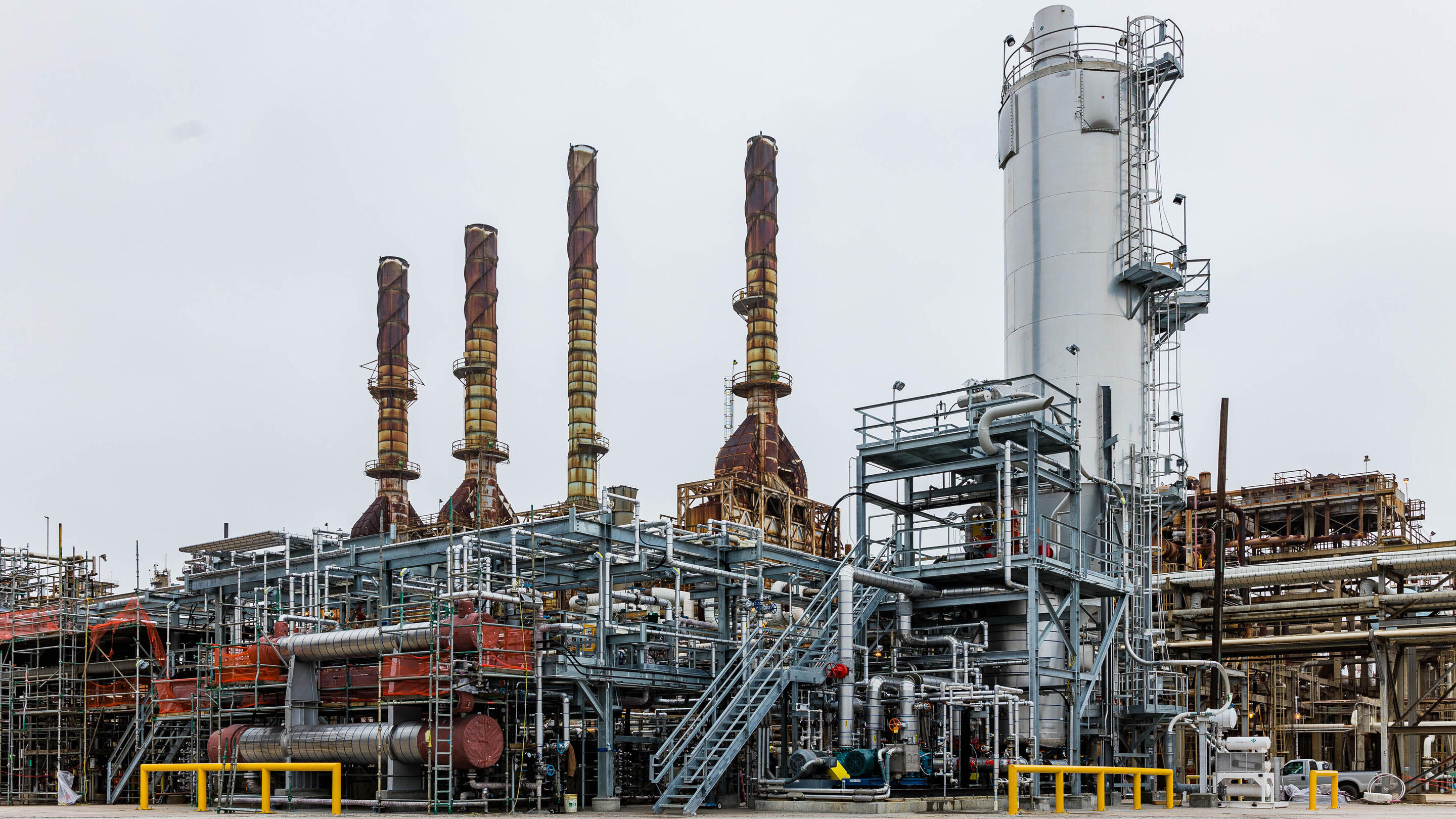
Our perspective is shaped by experience developing advanced recycling capabilities at scale. At our Baytown, Texas facility, one of the largest advanced recycling operations in the world, we have the capacity to process up to approximately 250 million pounds of plastic waste annually.
This experience has reinforced our view that advanced recycling, alongside mechanical recycling and other solutions, should play an important role in addressing plastic waste. Realizing its full potential, however, will require supportive policy frameworks, regulatory certainty, and recognition of advanced recycling as a proven solution.
By hosting policymakers and non-governmental organizations at our Baytown facility, we have demonstrated the capabilities of our advanced recycling technology and its role in helping address the challenge of plastic waste.
ExxonMobil engages with policymakers to help develop regulatory frameworks that support innovation, attract investment, and enable the deployment of advanced recycling technologies. This includes constructively addressing policy proposals that could unintentionally discourage new projects.
For example, while we support the European Union's ambition to increase recycling rates and recycled-content use, we have expressed concerns regarding proposed approaches to mass balance accounting that we believe could limit investment in advanced recycling projects and the use of existing infrastructure.
ExxonMobil will continue to work with regulators, customers, industry organizations, and other stakeholders to advance practical solutions that can help address plastic waste at scale. Well-designed policy frameworks, combined with technological innovation and private-sector investment, can accelerate the growth of advanced recycling and ultimately help keep more plastic waste out of landfills and the environment.
Carbon capture and storage:
Enabling deployment at scale
Carbon capture and storage (CCS) can play an important role in reducing greenhouse gas emissions from industrial activities such as refining, chemicals, steel, cement, and power generation. The International Energy Agency (IEA) describes CCS as an “essential” emissions-reduction technology, particularly in sectors where other solutions may be difficult to deploy.1
CCS involves capturing carbon dioxide emissions from industrial facilities and power generation, transporting the CO₂, and permanently storing it deep underground. When deployed successfully, CCS reduces emissions intensity without sacrificing output or economic activity.
Large-scale CCS projects require significant investment, access to transportation and storage infrastructure, and regulatory frameworks that provide clarity throughout a project’s lifecycle.
We advocate for policies that:
- facilitate the development of shared CO₂ transportation and storage systems,
- promote efficient and predictable permitting processes, and
- reduce unnecessary barriers to project development while maintaining strong environmental and safety standards.
ExxonMobil engages with policymakers, regulators, industry organizations, and other stakeholders to advance policies that support CCS deployment. This includes participation in organizations and initiatives such as the Zero Emissions Platform (ZEP), the Asia CCUS Network, and the Carbon Capture and Storage Association (CCSA). These organizations help inform policy discussions, share technical expertise, and encourage the responsible development of CCS technologies and infrastructure.
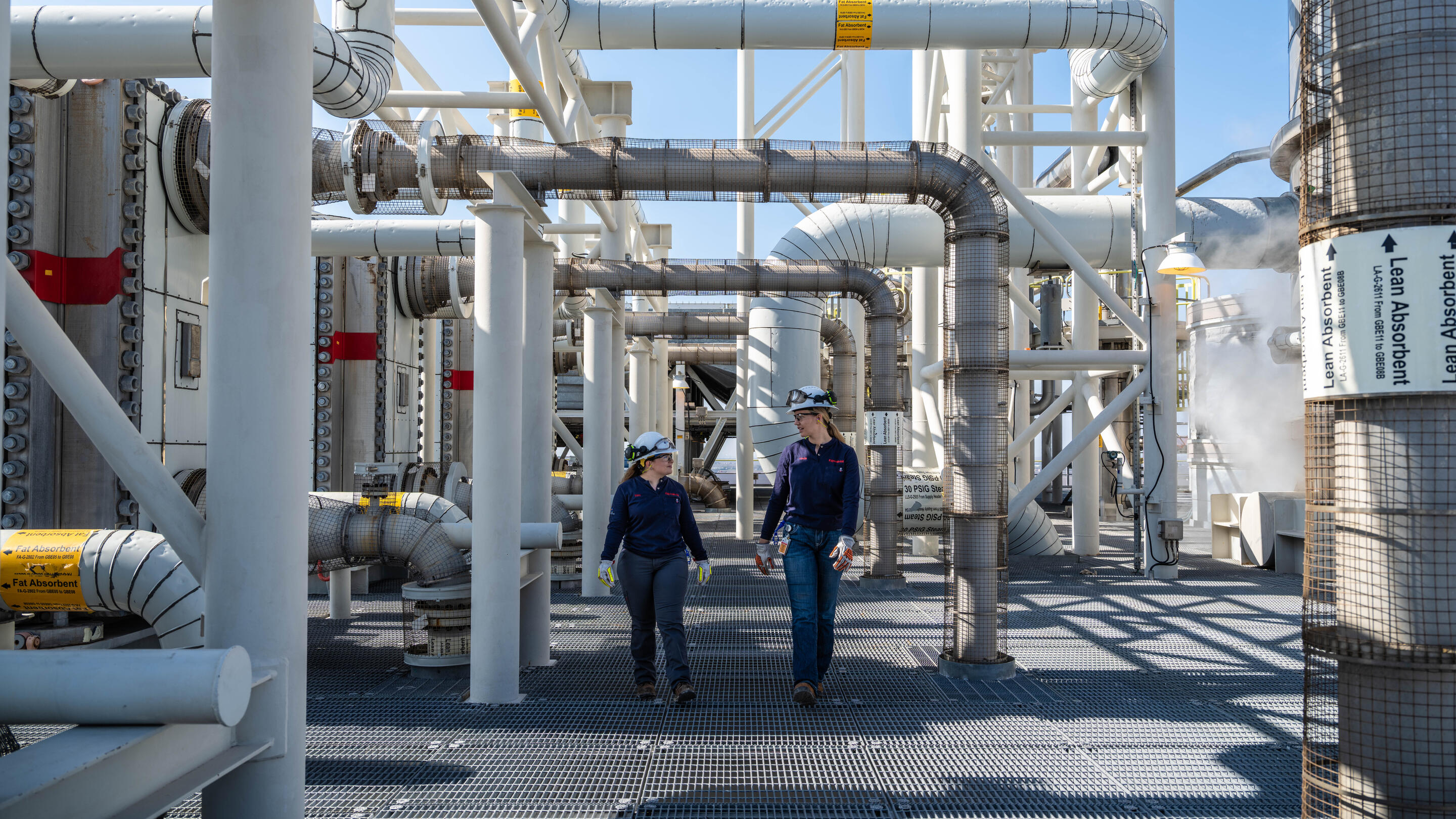
Today, along the U.S. Gulf Coast, ExxonMobil has an integrated CCS systems that capture, transport, and permanently store carbon dioxide. We operate the largest CO₂ pipeline network in the United States and continue to expand transportation and storage capabilities needed to support broader expansion.
ExxonMobil will continue to promote policies that support the commercial-scale use of carbon capture and storage. Our experience shows that the pace of CCS development depends not only on technology, but also on the ability to permit, build, and connect the infrastructure these projects require. We believe efficient permitting processes, durable regulatory frameworks, and continued infrastructure investment can help unlock broader deployment while supporting economic growth and reducing emissions.
Methane detection and mitigation:
Policy, technology and action
Reducing methane emissions offers one of the most important opportunities to help lower greenhouse gas emissions from the oil and natural gas sector. ExxonMobil supports policies and regulations that encourage effective methane detection, accurate measurement, transparent reporting, and timely mitigation across the industry. We believe methane policy should be science-based, performance-oriented, and designed to achieve measurable environmental outcomes while supporting reliable and affordable energy supplies.
As methane monitoring technologies continue to advance, policymakers have an opportunity to leverage new tools that strengthen emissions management and improve transparency. Continuous monitoring systems, aerial surveys, satellite observations, and other emerging technologies can provide valuable insights that help operators identify and mitigate emissions more efficiently. Based on our experience with these technologies, we believe regulatory frameworks should encourage innovation and provide flexibility to adopt technologies that enhance the detection and measurement of emissions over time.
ExxonMobil advocates for policies designed to reduce methane emissions throughout the oil and natural gas industry. We have engaged with policymakers and regulators in support of durable methane regulations, filed comments on federal methane rulemakings, publicly supported the Global Methane Pledge, and joined the U.N. Oil and Gas Methane Partnership 2.0 to promote enhanced measurement, reporting, and reduction of methane emissions. We have also introduced a Model Regulatory Framework that outlines practical approaches to methane management, including leak detection and repair, venting minimization, equipment management, and transparent reporting.
Our advocacy is informed by lessons learned across our operations. We have deployed multiple monitoring approaches and continue to evaluate emerging technologies to improve emissions detection and response. We have cut methane emissions intensity by more than 60% since 2016 and expect to achieve our planned reduction of 70-80% in 2026. We have found that effective methane management depends not only on identifying emissions, but also on generating actionable information that enables rapid response, effective mitigation, and continuous improvement. This experience reinforces our view that regulations should focus on environmental performance and outcomes while allowing flexibility in how those outcomes are achieved.
ExxonMobil has applied these principles in its engagement with policymakers and regulators. The company became the first to seek U.S. Environmental Protection Agency approval to use alternative methane detection technologies at oil and natural gas facilities, helping establish a pathway for broader deployment of advanced monitoring approaches. These technologies can strengthen emissions accountability, accelerate mitigation efforts, and complement existing regulatory programs.
Supporting sound methane policies also means being forthright when we see poor regulatory proposals or adverse implementation approaches. For example, we support the European Union’s Methane Emissions Regulation but have expressed serious concerns over how the European Commission is forcing compliance with monitoring, reporting, and verification provisions without having issued guidelines for that compliance.
We continue to engage policymakers, regulators, industry organizations, and technology providers to support practical methane policies that encourage innovation, improve measurement and reporting practices, and help reduce emissions across the industry. By combining effective regulation, technological advancement, and operational improvements, society can achieve meaningful methane reductions while continuing to meet growing global energy demand.
Publications
Explore more


FOOTNOTES:
- International Energy Agency. (2020). CCUS in clean energy transitions (p. 45). IEA. https://www.iea.org/reports/ccus-in-clean-energy-transitions
- IPCC AR6 Report, Chapter 3: Mitigation pathways compatible with long-term goals (page 332): https://www.ipcc.ch/report/ar6/wg3/downloads/ report/IPCC_AR6_WGIII_Chapter03.pdf